
Understanding the Financial Snapshot Every Business Needs
There is a document that sits quietly at the heart of every well-run business — one that does not tell you how much you earned last month or how much cash you have in the bank today, but something more fundamental. It tells you what the business owns, what it owes, and what it is truly worth at a specific point in time.That document is it . And learning to read it — to understand its structure, interpret its figures, and balance the balance sheet correctly — is one of the most valuable financial skills a business owner, manager, or entrepreneur can develop.
Unlike the profit & loss statement, which covers a period of time, the balance sheet captures a single moment. Think of it as a photograph taken on a specific date — typically the last day of a financial year or reporting period — showing the complete financial position of the business at that instant. Everything that happened before that date has shaped what appears on it.
This guide explains what a balance sheet is, how it is structured what each component means, why it matters for your business, and how eLegalKart helps businesses maintain accurate and compliant financial records.
What is a Balance Sheet?
A balance sheet is a financial statement that presents a business’s assets, liabilities, and equity at a specific point in time. It is one of the three core financial statements — alongside the profit & loss statement and the cash flow statement — and is a mandatory part of the annual financial reporting for companies, LLPs, and other registered entities in India.
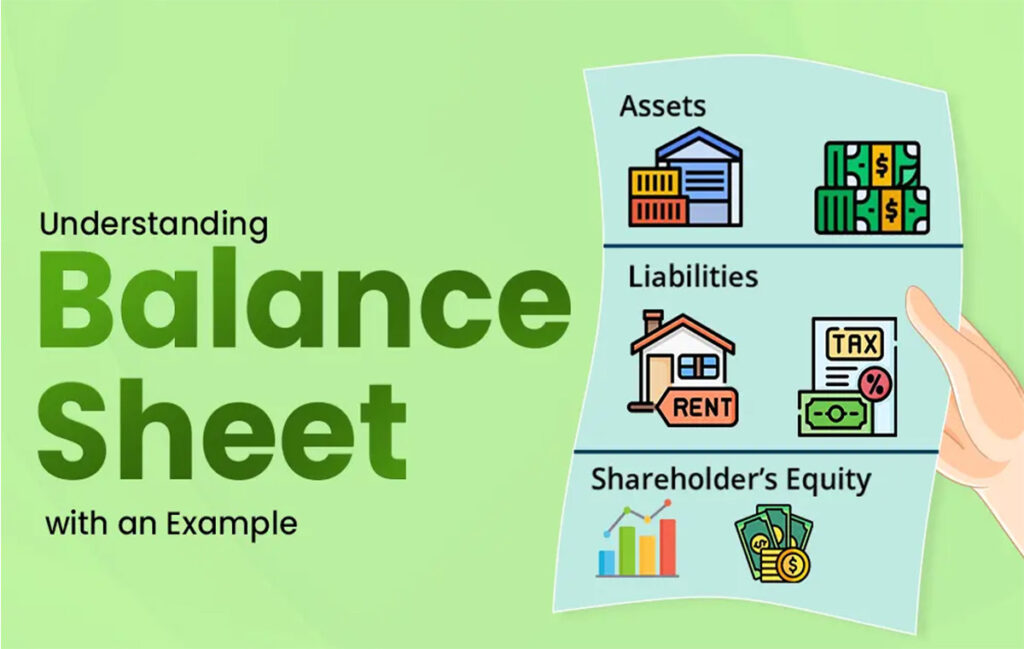
The name comes from the central principle that governs it:
Assets = Liabilities + Equity
This equation must always hold. Every resource the business controls (assets) is financed either by money borrowed from others (liabilities) or by money invested by the owners (equity). When a business records all of its financial transactions correctly and prepares its accounts accurately, this equation balances — which is why learning to balance the balance sheet is not just a technical task but a measure of the integrity of the entire accounting system.
If the equation does not balance, something is wrong. Either a transaction has been recorded incorrectly, an entry has been missed, or there is an error somewhere in the accounting records. The act of ensuring that the two sides of this equation are equal — to balance the balance sheet — is fundamental to the process of preparing reliable financial statements.
Key Financial Ratios Derived from the Balance Sheet
The numbers on a balance sheet become even more useful when they are used to calculate ratios that provide meaningful benchmarks for comparison.
Current Ratio
Current Ratio = Current Assets ÷ Current Liabilities
This measures the ability of the business to cover its short-term obligations with its short-term assets. A ratio above 1 generally indicates adequate short-term liquidity. A ratio below 1 is a warning sign.
Debt-to-Equity Ratio
Debt-to-Equity Ratio = Total Debt ÷ Total Equity
This shows how much of the business is financed by debt relative to owner investment. A high ratio indicates greater financial risk; a lower ratio suggests a more conservative capital structure.
Return on Equity
Return on Equity = Net Profit ÷ Total Equity
While net profit comes from the P&L, equity comes from the balance sheet. Together they show how efficiently the business is generating returns on the owners’ investment.
Working Capital
Working Capital = Current Assets − Current Liabilities
Positive working capital means the business has enough short-term resources to fund its operations. Negative working capital is a signal of potential liquidity pressure.
These ratios are regularly used by banks when assessing loan applications, by investors when evaluating businesses, and by management teams when monitoring financial performance.
Why the Balance Sheet Matters
Many business owners focus primarily on revenue and profit — understandably so. But it tells a different and equally important story. Here is why it deserves serious attention:
It Shows What the Business Is Really Worth
Profit tells you how much the business earned during a period. The balance sheet tells you the cumulative result of everything the business has done since it began — the assets it has built, the debts it has taken on, and the net worth that belongs to its owners. This is a far more complete picture of financial health than any single period’s profit or loss.
It Reveals How the Business Is Financed
Every asset on a balance sheet is financed by something — either debt or equity. A business that has borrowed heavily to fund its assets carries higher financial risk than one that is primarily equity-financed. The balance sheet makes this structure visible, which is why lenders and investors spend so much time studying it before making financial decisions.
It Identifies Liquidity and Solvency
Liquidity refers to how easily a business can meet its short-term obligations. Solvency refers to whether the business has more assets than liabilities overall. Both are read from the balance sheet. A business that is profitable but illiquid — meaning it does not have enough current assets to cover current liabilities — is in a precarious position despite its earnings.
It Is a Regulatory Requirement
For companies registered under the Companies Act, 2013, the preparation and filing of a balance sheet is mandatory. It must follow the format prescribed in Schedule III of the Companies Act and must be audited by a qualified chartered accountant. For LLPs, similar requirements apply under the LLP Act, 2008. Non-compliance attracts penalties and can jeopardise the company’s standing with the MCA.
It Supports Strategic Decision-Making
Is the business carrying too much debt? Are receivables piling up faster than they are being collected? Is the inventory growing without a corresponding increase in sales? These are strategic questions — and the balance sheet is where the answers show up.
The Structure of a Balance Sheet
A balance sheet is divided into two sides — or in a vertical format, two sections — that must always be equal. Understanding each component is essential for reading and interpreting it correctly.
Assets
Assets are everything the business owns or controls that has economic value. They are classified into two broad categories:
Non-Current Assets (Fixed Assets)
These are assets that the business intends to hold and use for more than one year. They are not meant to be sold in the normal course of business but are used to generate revenue over time.
- Tangible fixed assets — property, plant, equipment, vehicles, furniture, and computers. These are recorded at cost less accumulated depreciation.
- Intangible assets — intellectual property, goodwill, trademarks, patents, and software licences that have value but no physical form.
- Long-term investments — shareholdings in other companies, long-term deposits, or loans given to related parties for periods exceeding one year.
- Capital work in progress — assets that are being constructed or installed and are not yet ready for use.
Current Assets
These are assets that are expected to be converted into cash or used up within one year. They represent the working capital of the business.
- Inventories — raw materials, work-in-progress, and finished goods held for sale.
- Trade receivables — amounts owed to the business by customers for goods sold or services rendered on credit.
- Cash and cash equivalents — physical cash, bank balances, and short-term liquid investments.
- Short-term loans and advances — prepaid expenses, advance payments to suppliers, and other short-term receivables.
Liabilities
Liabilities are everything the business owes to others — its obligations to repay money, deliver goods, or fulfil commitments.
Non-Current Liabilities
These are obligations that the business does not expect to settle within the next twelve months.
- Long-term borrowings — bank loans, debentures, and other debt instruments with repayment periods exceeding one year.
- Deferred tax liabilities — tax obligations that arise due to timing differences between accounting profit and taxable profit.
- Long-term provisions — provisions for employee gratuity, warranties, or other long-term obligations.
Current Liabilities
These are obligations that must be settled within one year and are central to assessing the short-term financial health of the business.
- Trade payables — amounts owed to suppliers for goods purchased or services received on credit.
- Short-term borrowings — bank overdrafts, working capital loans, and other short-term debt.
- Other current liabilities — advance payments received from customers, statutory dues payable (TDS, GST, PF), and other short-term obligations.
- Short-term provisions — provisions for tax, dividends, and other near-term commitments.
Equity (Shareholders’ Funds / Owner’s Capital)
Equity represents the owners’ stake in the business — the residual interest after all liabilities have been deducted from all assets.
Share Capital — For companies, this is the amount invested by shareholders in exchange for shares. It is recorded at the face value of shares issued.
Reserves and Surplus — This includes retained earnings (profits that have not been distributed as dividends but kept in the business), securities premium (amount received above face value when shares are issued), and other reserves created for specific purposes.
Retained Earnings — The cumulative net profit earned by the business since inception, less any dividends distributed to owners. Every year, the net profit from the profit & loss statement is added to retained earnings on the balance sheet — which is how the two statements are connected.
How to Balance the Balance Sheet
To balance the balance sheet is to ensure that the fundamental accounting equation holds:
Assets = Liabilities + Equity
In double-entry bookkeeping — the system on which all formal accounting is based — every financial transaction is recorded as at least two entries: a debit and a credit. When recorded correctly, debits and credits always equal each other, and the balance sheet always balances.
For example, when a business takes a bank loan of ₹10 lakhs:
- Assets increase by ₹10 lakhs (cash in the bank goes up)
- Liabilities increase by ₹10 lakhs (the loan amount is now owed)
Both sides of the equation increase by the same amount. The balance is maintained.
When a business earns a profit:
- Assets increase (more cash or receivables)
- Equity increases (profit is added to retained earnings)
Again, both sides move equally. This is why the balance sheet always balances when transactions are recorded correctly.
When a balance sheet does not balance — when the two sides are not equal — it is an indication that one or more transactions have been recorded incorrectly, that an entry has been omitted, or that the accounts have not been reconciled properly. Identifying and correcting these discrepancies is the work of careful bookkeeping and professional accounting.
The Balance Sheet in the Indian Regulatory Context
In India, the format and content of the balance sheet for companies is prescribed under Schedule III of the Companies Act, 2013. This schedule specifies exactly how assets and liabilities must be classified and presented, what disclosures must be made, and how certain items must be described.
Companies must prepare their balance sheet in accordance with Indian Accounting Standards (Ind AS) or the older Accounting Standards issued by the Institute of Chartered Accountants of India (ICAI), depending on their size and classification. Larger companies — particularly those listed on stock exchanges or those meeting certain net worth or turnover thresholds — are required to follow Ind AS, which is aligned with International Financial Reporting Standards (IFRS).
The balance sheet must be signed by the directors of the company and audited by a statutory auditor — a qualified chartered accountant who is independent of the company. The audited balance sheet is then filed with the MCA as part of the company’s annual compliance filings.
For LLPs, financial statements including the balance sheet must be filed in Form 8 (Statement of Accounts and Solvency) with the MCA annually. For partnership firms and sole proprietors, while specific formats are not mandated by corporate law, preparing a proper balance sheet is essential for income tax compliance and practical financial management.
How eLegalKart Supports Your Balance Sheet Preparation
Preparing an accurate, compliant balance sheet requires disciplined bookkeeping throughout the year, proper classification of every transaction, reconciliation of accounts, and presentation in the correct regulatory format. For most business owners, this is not a task to be handled at the last minute before a filing deadline.
eLegalKart’s team of qualified chartered accountants manages the complete accounting cycle for your business — from maintaining day-to-day records and reconciling accounts to preparing annual financial statements, including the balance sheet, in the format required under Indian accounting standards and regulatory requirements.
We work with companies, LLPs, partnership firms, and sole proprietors to ensure that their financial statements are accurate, properly classified, and ready for statutory audit, MCA filing, income tax return preparation, or any other purpose — whether that is securing a bank loan, presenting to investors, or simply having a clear understanding of where the business stands financially.
Our approach is straightforward: we maintain your accounts with care throughout the year so that producing the year-end balance sheet is a smooth process rather than a scramble. And we explain the numbers to you in plain language — because the balance sheet is most useful when the person who runs the business can actually read it.