
Everything You Need to Know Before Starting a Private Security Business in India
If you are planning to start a private security agency in India, one of the first and most important steps is obtaining a PSARA Licence. Without it, running a private security business is not just difficult — it is illegal. Yet many entrepreneurs and business owners remain unclear about what this licence actually involves, who needs it, and how to go about getting one.
This guide walks you through the entire subject in plain language, covering the legal framework, eligibility conditions, the application process, required documents, validity, and the consequences of operating without proper authorisation.
What is a PSARA Licence?
A PSARA Licence is a mandatory authorisation issued under the Private Security Agencies (Regulation) Act, 2005 — commonly known as PSARA. This central legislation was enacted to regulate the functioning of private security agencies across India and to bring uniformity and accountability to an industry that had grown largely unregulated.
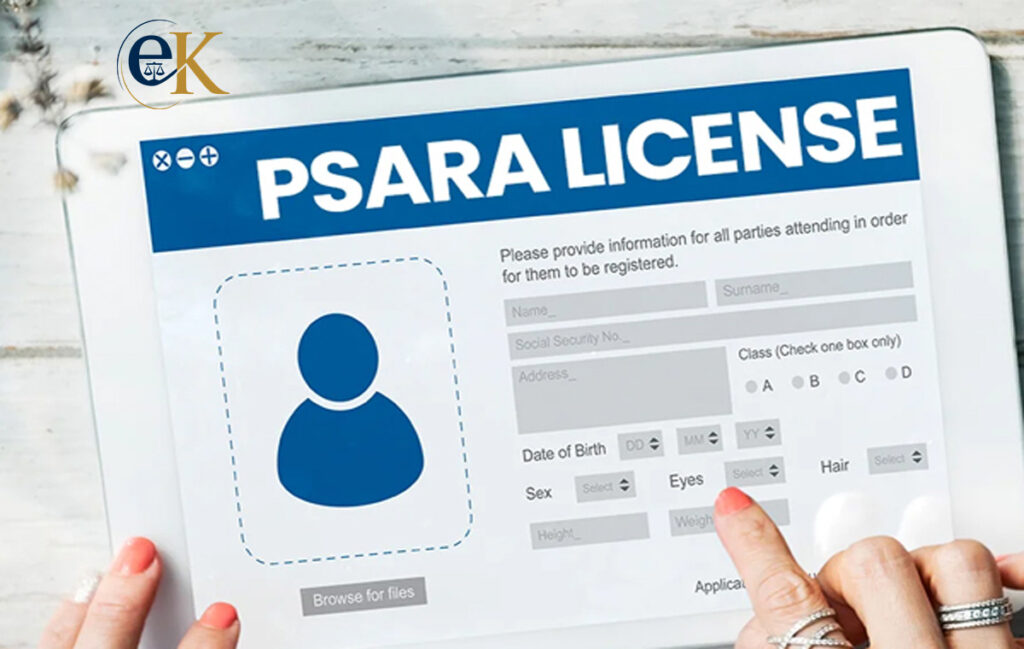
Before PSARA came into force, private security companies operated in a fragmented manner, often with little oversight regarding the training, background, and conduct of security personnel. The Act changed this by creating a structured licensing regime and setting minimum standards for security guards, supervisors, and agency owners alike.
In simple terms, if your business involves deploying trained security personnel to protect people, property, or premises — whether residential complexes, commercial offices, banks, hospitals, or events — you need a valid PSARA Licence to operate legally.
Who Needs to Obtain a PSARA Licence?
Any individual, firm, company, or organisation that operates as a private security agency is required to obtain this licence. This includes:
- Companies providing armed or unarmed security guards
- Agencies supplying bouncers for events or establishments
- Businesses offering personal protection or bodyguard services
- Organisations providing cash-in-transit or vault security services
- Agencies that train security personnel and supply them to clients
Even if you are running the security agency as a side business or on a small scale, the licence requirement still applies. The law does not make exceptions based on the size of the operation.
The Legal Foundation: PSARA 2005
The Private Security Agencies (Regulation) Act, 2005 provides the complete legal framework for this sector. Here are some of the key provisions you should be aware of:
Central vs. State Authority
While PSARA is a central Act, the licensing authority is typically the Controlling Authority appointed by the respective state government. This means the licence is issued on a state-by-state basis. If you operate across multiple states, you need separate licences for each state.
Controlling Authority
Each state government designates an officer, usually a senior police officer, as the Controlling Authority. This authority is responsible for receiving applications, conducting inquiries, and granting or rejecting licences.
Compliance Obligations
Licensed agencies must follow rules regarding the character verification of security guards, their training through approved institutions, maintenance of records, uniform standards, and adherence to wage guidelines.
Eligibility Criteria for a PSARA Licence
Not everyone can apply for a PSARA Licence. The Act and state-specific rules lay down eligibility conditions that applicants must satisfy before they can be considered. These include:
For the Applicant or Promoters:
- Must be a citizen of India
- Should not have been convicted of any offence involving moral turpitude or any crime related to national security, terrorism, or communal violence
- Must not have been dismissed from government service for misconduct or corruption
- Should be mentally sound and financially solvent
For the Agency:
- Must be a legally registered entity (sole proprietorship, partnership firm, LLP, or private/public limited company)
- Should have a defined place of business in the state where the licence is sought
- Must have a registered MOU (Memorandum of Understanding) with an approved training institution that will train its security guards
This last requirement — the MOU with a PSARA-approved training institution — is often where applicants get stuck. It is a non-negotiable condition under the Act, and the training institute must be on the approved list maintained by the respective state’s Controlling Authority.
Documents Required for PSARA Licence Application
The documentation requirement can vary slightly from one state to another, but the following is a standard list of what most states ask for:
Identity and Address Documents:
- PAN card of the applicant/company
- Aadhaar card or passport of all directors/partners
- Address proof of the registered office (rent agreement, utility bill, or ownership documents)
Business Registration Documents:
- Certificate of Incorporation (for companies)
- Partnership deed or LLP agreement (as applicable)
- GST registration certificate
- Memorandum and Articles of Association (for companies)
Police Verification and Background Check:
- Character verification certificate for the applicant and all key personnel
- Antecedents report from the local police station
Training-Related Documents:
- Copy of MOU with an approved training institution
- Details of the training curriculum and facilities
Other Documents:
- Affidavit confirming eligibility as per PSARA conditions
- Photographs of applicant and key personnel
- Details of proposed operations, including the states you plan to operate in
Having all these documents in order before submitting your application can significantly reduce delays. Incomplete applications are a common reason for extended processing times.
Step-by-Step Process to Obtain a PSARA Licence
Here is how the application process generally works:
Step 1 – Business Registration If you have not already done so, register your business as a legal entity. This could be a private limited company, LLP, or any other recognised structure under Indian law.
Step 2 – MOU with Approved Training Institute Identify and enter into a formal MOU with a PSARA-approved training institute in your state. This institute will train your security guards before they are deployed. The MOU must specify training modules, duration, and certification.
Step 3 – Prepare Documentation Compile all the required documents as outlined above. Ensure that police verification certificates are current and that affidavits are duly notarised.
Step 4 – Submit Application to the Controlling Authority Submit your application to the designated Controlling Authority in the state. In most states, this involves filing a physical application along with the prescribed fee, though some states have introduced online submission portals.
Step 5 – Inquiry and Verification The Controlling Authority will conduct a verification process, which includes background checks on the applicant and key management personnel. This step can take anywhere from a few weeks to a few months depending on the state.
Step 6 – Grant of Licence If all conditions are satisfied, the Controlling Authority issues the PSARA Licence. The licence will specify the state(s) in which you are authorised to operate.
Validity and Renewal of PSARA Licence
A PSARA Licence is typically valid for five years from the date of issue. After five years, it must be renewed. The renewal process generally follows a similar procedure as the initial application, though it may be somewhat simpler if the agency has maintained a clean compliance record during the licence period.
It is important not to let the licence lapse. Continuing operations after the expiry date — even if the renewal application is pending — can attract legal consequences.
Penalties for Operating Without a PSARA Licence
Running a private security agency without a valid PSARA Licence is a punishable offence. The Act provides for imprisonment of up to one year, a fine of up to Rs. 25,000, or both for those found operating without a licence. Repeat offences attract higher penalties.
Beyond the direct legal consequences, operating without a licence can also lead to cancellation of contracts, reputational damage, and difficulty obtaining the licence in future due to a tainted record.
Why Professional Assistance Makes a Difference
The PSARA Licence process, while structured, involves multiple steps across government departments — registration authorities, police verification offices, and the Controlling Authority. Each stage has its own timelines, and any error or missing document can push back the entire process by weeks.
Working with a legal service provider like eLegalKart ensures that:
- Your application is complete and accurate from the start
- You are connected with the right approved training institute for your MOU
- Police verification and background checks are coordinated efficiently
- You receive guidance on state-specific requirements if you are applying in multiple states
- Renewal timelines are tracked so you never operate on an expired licence
Having professionals handle the procedural aspects lets you focus on building your business rather than navigating bureaucratic complexities.